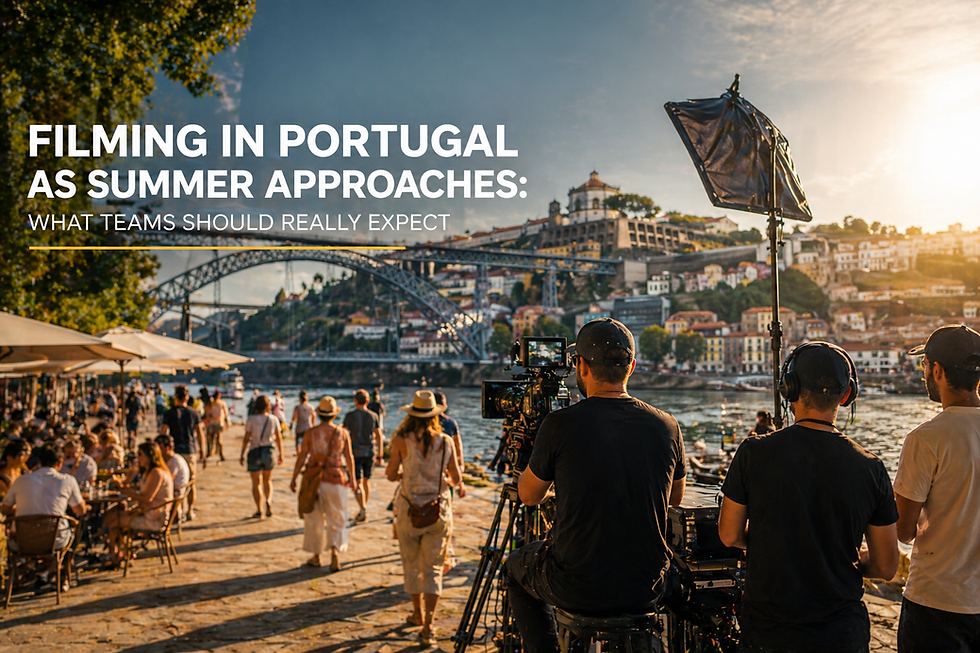
What Visiting Portugal for a Shoot Feels Like
There’s a moment that often happens when someone comes to Portugal for a shoot for the first time. It’s not when they land, and it’s not during the first location scout. It usually happens later, during a walk that wasn’t planned, when the schedule loosens a bit and the pressure drops.
That’s when people stop trying to capture something and start noticing what’s already there. The light shifts, the pace slows, and the place starts to speak for itself. That’s often when the story begins to feel clearer.
Portugal moves at a different rhythm, and that matters when you’re trying to tell a story. Things don’t announce themselves loudly. Locations reveal themselves through small details, texture, repetition, and timing. A street feels different in the morning than it does in the afternoon. A café changes character depending on who’s sitting there and how long they stay.
That slower pace gives ideas room to settle. It encourages observation before decisions get locked in, which can be a gift when you’re working on something visual.
Some of the strongest moments don’t happen during a setup at all. They happen in between. Someone passing through frame unexpectedly. Shadows stretching across stone later in the day. A pause, a glance, a detail that wasn’t part of the plan. Portugal tends to reward patience more than control.
There’s also a temptation, especially for visiting teams, to explain everything. The place, the context, the meaning. But visually, Portugal already carries a lot of weight. Often the more you let it exist without over-narration or instruction, the more it supports the story instead of competing with it.
A location on its own doesn’t make a story stronger. But when the story is clear, Portugal has a way of quietly doing a lot of work in the background. It adds atmosphere and grounding without asking for attention. Shoots feel lighter. Decisions feel simpler. The final piece feels more honest and less forced.
Coming here isn’t really about control. It’s more about trust. You don’t need every answer before you arrive. You just need to understand what the story is trying to say and allow the environment to support that intention.
When that happens, the process feels less like managing logistics and more like letting something unfold naturally.
This blog shares updates and observations on Portugal’s creative scene and storytelling culture, not industry commentary.